
What's a Blue Hole?
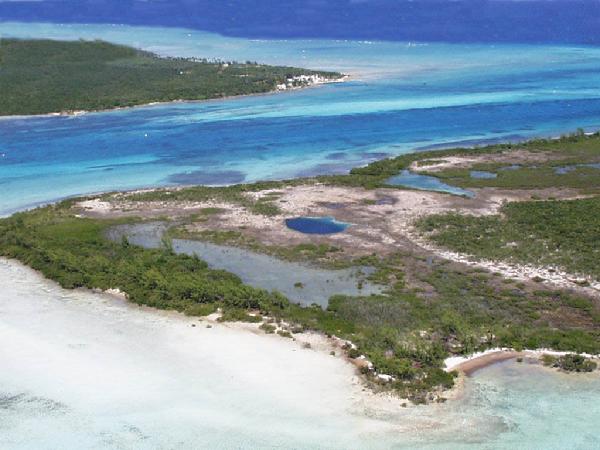
Blue holes get their name due to the apparent blue color of their surface water. This is generally just a reflection of the sky on the water when viewed from an aircraft.
The surface water in some blue holes can be dark, tannin or even muddy, but the deep water below is usually very clear.
The best scientific description for blue holes is:
"Blue holes are subsurface voids that are developed in carbonate banks and islands; are open to the surface; contain tidally influenced waters of fresh, marine or mixed chemistry; extend below sea level for a majority of their depth; and may provide access to submerged cave passages".
(From Mylroie and Carew 1995)
Unlike the springs found in Florida, the underwater cave systems of the Bahamas (collectively called blue holes) are the result of several erosional processes, including:
- High and low sea level stands associated with glacial (ice ages) and inter-glacial periods.
- Chemical dissolution of the calcium carbonate due to carbon dioxide-laden rain- water percolating down through the limestone.
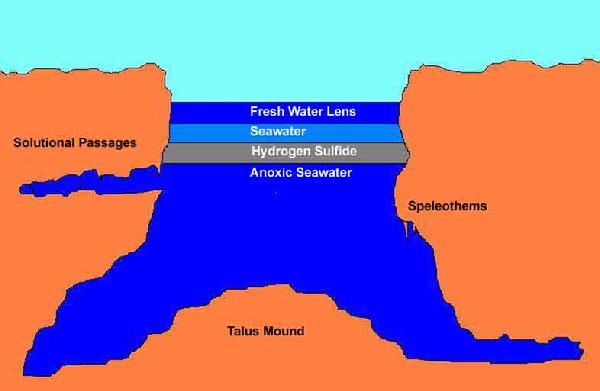
- Chemical dissolution of the calcium carbonate due to hydrogen sulfide and associated sulfur reducing bacteria within in the water column. Hydrogen sulfide is a byproduct of degrading organic matter that is introduced into the cave from the surface, or in the case of marine (completely submerged sea caves) caves, from organic matter being drawn into the cave on the incoming tides.
OR a combination of two or more of the above processes over time.
Blue holes in the Bahamas are usually classified as one of several types:
Geologic
Sinkholes
These are the large round blue holes usually seen from the air and are the type of formation where the Blue Holes get their name.
Fault line or fracture
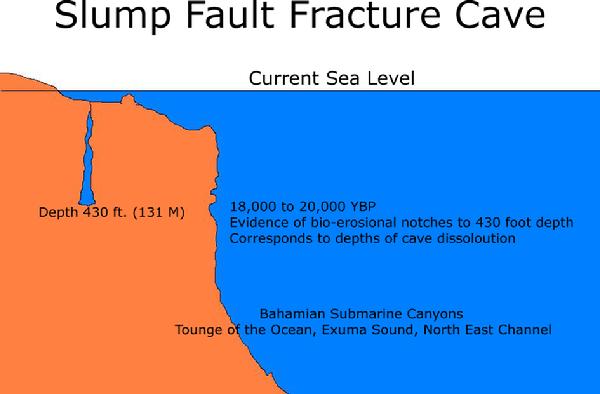
These very deep caves are usually associated with localized faulting. The systems generally run parallel to a deep-water, offshore canyons such as the Tongue of the Ocean east of Andros Island, or the Exuma Sound, east of the Exuma Cays.
Lens based blue holes
These caves are usually the longest of the blue holes and are often highly decorated with SPELEOTHEMS. They are the result of a well-defined fresh water lens and the processes discussed above, actively dissolving a vast system of passages into the limestone.
These are also known as flooded flank margin caves.
Geographic
Inland blue holes
These can be of any geological type as described above, with the entrance being accessed from land.
Marine or ocean blue holes
These can also be of any geological type, with entrances being access from below sea level. Generally, tides and currents heavily influence this type of cave.
It should be noted that due to the unique geology of the Bahamas, each of these different types of caves could be associated with or connected to each other.
For example, Angelfish Blue Hole in the Exuma Cays is predominantly a lens-based cave that connects through several passages to a major local fault line cave system.
After their initial creation, fault line caves continue to enlarge by the same chemical processes as lens-based caves.
Because of its subsurface entrance this cave is also considered a marine or ocean blue hole.
Another example is Bottomly's Blue Hole and Mystery Cave on Stocking Island, Exuma.
Bottomly's is an inland (Anchialine) blue hole, that is connected by a labyrinth of passages to Mystery cave, which is a very tidally effected marine blue hole.
For more information on Anchialine caves, check out Dr. Tom Iliffe's website:
http://www.cavebiology.com/ This unique combination of cave types is not found anywhere else in the world, making underwater cave exploration and research in the Bahamas both exciting and challenging.
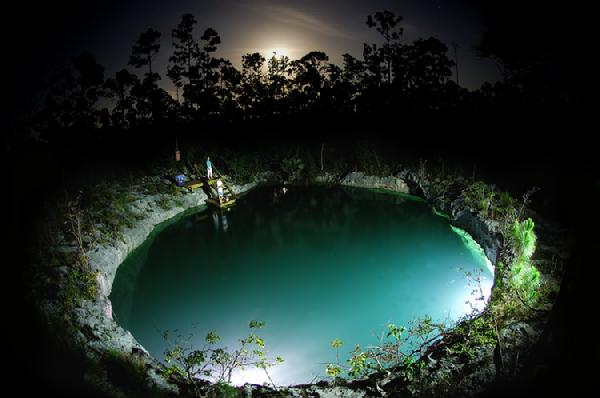
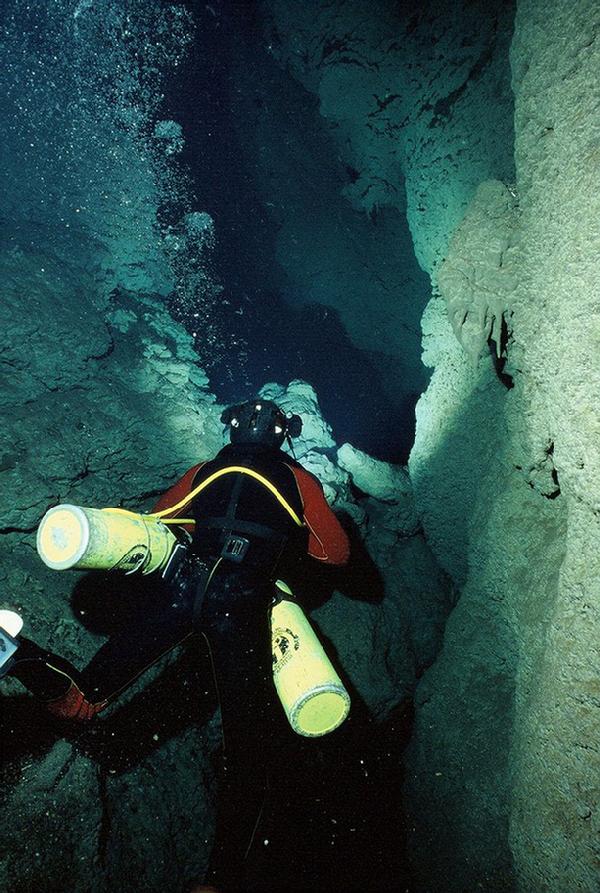
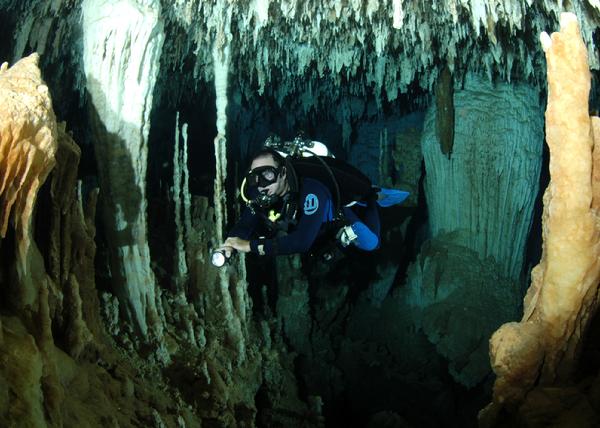
Click on images to view them full size. Photo credits: Top - Curt Bowen, Center - Brian Kakuk, Bottom - Curt Bowen
All Graphics by Brian Kakuk